
Slab and pier-and-beam repair in Northeast Tarrant County
Foundation Repair in North Richland Hills, TX
We measure how your floors have moved, find the cause, and give you a written repair plan before any work starts.
- Free on-site foundation evaluations
- Floor elevation measurements included
- Written quote before work starts
Measure First, Then Repair
Foundation repair in North Richland Hills begins with a simple question: why did the house move? A cracked brick wall or a door that won't latch is a symptom. The cause is usually the soil under the house getting wetter or drier than it used to be, and sometimes a leak, a tree or water pooling against the slab. A repair that ignores the cause can leave the house moving again, so every job here starts with measurements and a look at what is happening around the foundation.
Why houses move in the Metroplex
UT Dallas geologist Robert Stern describes the Metroplex as a mix of limestone, sandy Woodbine soils through the Mid-Cities, and clay-rich shales such as the Eagle Ford, whose swelling clays sometimes cause problems for construction. Expansive clay soils swell when they take on water and shrink when they dry. DFW's weather puts that cycle to work: the National Weather Service recorded 71 days of 100 degrees or more at DFW in 2011, the most in any year on record, and the average first 100-degree day arrives around July 1. A long hot summer pulls moisture out of clay, and heavy rain puts it back. Slabs that rest on that soil rise and drop with it, and they rarely move evenly.
What the free evaluation includes
- Floor elevation readings across the house, so high and low areas are measured
- A walk around the outside: brick and mortar cracks, gaps at windows and trim, gutters, downspouts and grading
- A look at trees and beds close to the foundation
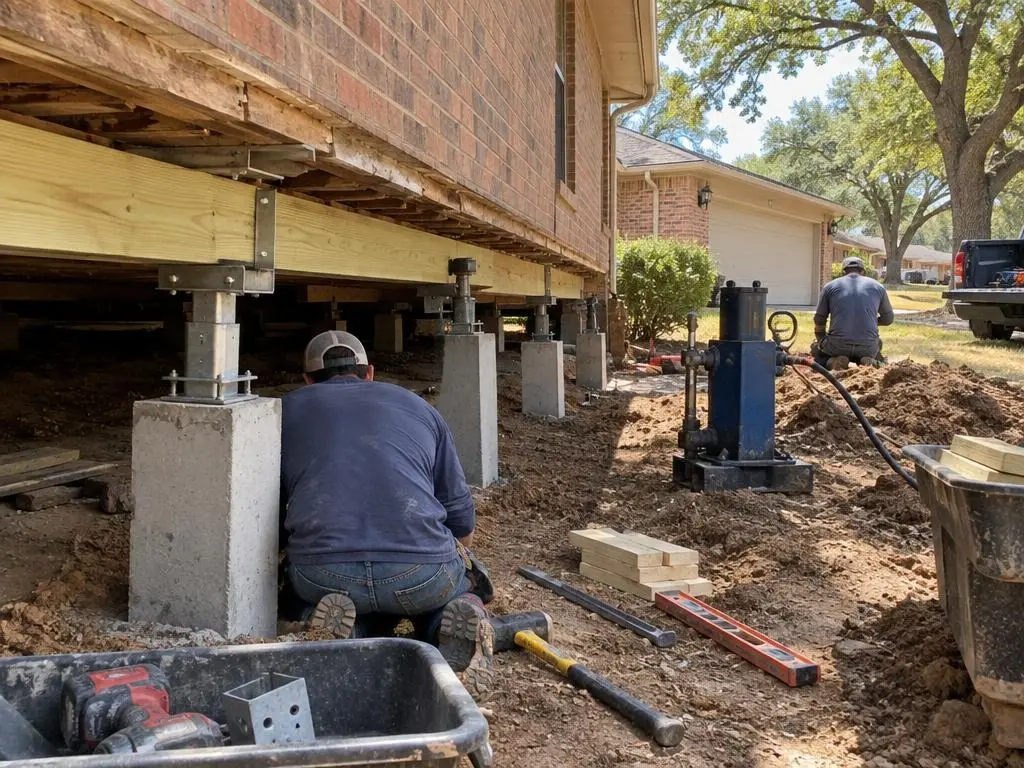
- For pier-and-beam homes, a look into the crawl space at piers, beams, shims and moisture
- A written quote with the cause we see, the repair we suggest and where any piers would go
If the readings or the history of the house call for it, we recommend a structural engineer's evaluation before you decide.
Repair methods
Slab repair is done with piers placed under the foundation's perimeter beam, and sometimes under interior beams, to support and lift the low areas. Pressed concrete piles are precast concrete cylinders pressed into the ground one on top of another. Steel piers are driven deeper, toward firmer material. Drilled piers are holes drilled in the soil and filled with reinforced concrete, sometimes with a widened bell at the bottom; Wikipedia's summary of deep foundations notes that under-reamed piles suit expansive soils that change with the seasons. Pier-and-beam houses are often leveled by reshimming or adding piers in the crawl space. The right method depends on the soil, the house and the budget, and we explain the trade-offs in the quote.
Permits in North Richland Hills
The City of North Richland Hills lists foundation repairs among the projects that require a building permit, and contractors must register with the city before applying for their first permit. The city also says it is the homeowner's responsibility to make sure the contractor pulls the proper permits, and that the permit should be displayed on site until the work passes inspection. We can help prepare the permit application where the city allows. Other cities in the area have their own rules, so confirm them with your city.
Work we leave to other trades
Texas law requires plumbing work to be done by licensed plumbers, so plumbing tests and slab-leak repairs are not part of our work. If you want the drain or supply lines tested before or after a repair, the owner hires a licensed plumber, and we schedule around it. North Richland Hills also requires plumbers to document slab-leak repairs under a foundation with video or photos for the building inspector. Sprinkler systems that need to be moved for drainage work are handled by a licensed irrigator the owner hires.
Older homes and newer homes
North Richland Hills grew from a 268-acre dairy farm subdivision in 1952 into a city of about 70,000 people. Its population grew from 8,662 in 1960 to 45,895 by 1990, so many neighborhoods were built over a few decades and have been through many dry summers and wet springs since. Newer homes are not immune: a slab poured a few years ago can move when the soil under it dries or a downspout empties against it. Age changes what we look for, not whether we look.
Our Foundation Services
Six services that cover the foundation itself and the water, trees and crawl spaces that make it move.
Slab Foundation Repair
Piering under the perimeter and interior beams to support and lift slabs that have settled or heaved.
Learn more →Pier & Beam Foundation Repair
Reshimming, new piers and beam repair for houses that sit above a crawl space.
Learn more →Foundation Drainage & French Drains
Gutters, downspout extensions, grading and French drains that keep water from pooling against the foundation.
Learn more →Root Barrier Installation
Vertical barriers between trees and the foundation, installed with honest advice about what they can and cannot do.
Learn more →Crawl Space Repair
Moisture control, vapor barriers, ventilation and wood repair under pier-and-beam houses.
Learn more →Foundation Crack Repair
Measuring, sealing and repairing cracks in slabs, beams and brick, and finding out whether they are still moving.
Learn more →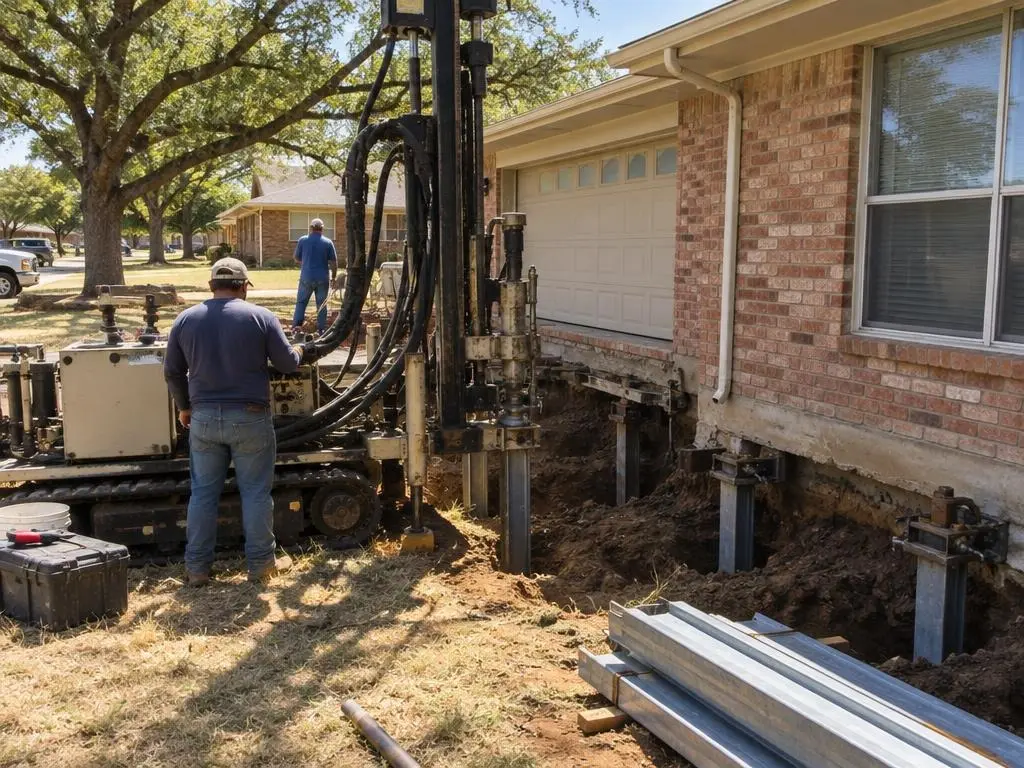
Why Homeowners Call Foundation Repair North Richland Hills
Measured, not guessed
Floor elevation readings at every evaluation, so the repair plan matches how the house has actually moved.
Cause before cure
We look at drainage, gutters, trees and leaks as well as the slab, and put what we find in writing.
Engineer when it matters
We recommend a structural engineer's evaluation when the movement, the history or the scope calls for one.
Permits checked first
Foundation repair needs a permit in North Richland Hills. We can help prepare the application where the city allows; confirm requirements with the city.
Where We Work
North Richland Hills is home base. From there we serve 29 more communities: the neighboring Northeast Tarrant cities of Richland Hills, Haltom City, Watauga, Keller, Hurst, Euless, Bedford, Colleyville, Grapevine and Southlake; Saginaw, Haslet, Lake Worth, Azle, River Oaks, White Settlement, Benbrook, Kennedale and Fort Worth itself to the west and south; Roanoke, Trophy Club, Westlake, Flower Mound and Coppell to the north and northeast; and Arlington, Irving, Grand Prairie, Mansfield and Burleson across the rest of the Metroplex. Soils change from sandy ground to heavy clay across this area, and each city handles foundation repair permits its own way, so each area page covers what applies there.
- Foundation Repair in North Richland Hills, TX
- Foundation Repair in Richland Hills, TX
- Foundation Repair in Haltom City, TX
- Foundation Repair in Watauga, TX
- Foundation Repair in Keller, TX
- Foundation Repair in Hurst, TX
- Foundation Repair in Euless, TX
- Foundation Repair in Bedford, TX
- Foundation Repair in Colleyville, TX
- Foundation Repair in Grapevine, TX
- Foundation Repair in Southlake, TX
- Foundation Repair in Saginaw, TX
- Foundation Repair in Fort Worth, TX
- Foundation Repair in Arlington, TX
- Foundation Repair in Irving, TX
- Foundation Repair in Grand Prairie, TX
- Foundation Repair in Mansfield, TX
- Foundation Repair in Flower Mound, TX
- Foundation Repair in Coppell, TX
- Foundation Repair in Haslet, TX
- Foundation Repair in Roanoke, TX
- Foundation Repair in Trophy Club, TX
- Foundation Repair in Westlake, TX
- Foundation Repair in Lake Worth, TX
- Foundation Repair in Azle, TX
- Foundation Repair in Benbrook, TX
- Foundation Repair in White Settlement, TX
- Foundation Repair in River Oaks, TX
- Foundation Repair in Burleson, TX
- Foundation Repair in Kennedale, TX
Common Questions
How much does foundation repair cost in Texas?
Angi's 2026 national data puts the average foundation repair around $5,174, with most jobs between $2,225 and $8,133, and concrete slab repairs ranging from about $350 to $20,000. Piering is usually priced per pier: Angi lists about $1,000 for a concrete pier and about $2,000 for a steel pier, and a typical underpinning job of about ten piers at $10,000 to $30,000. The number of piers, access, drainage work and permits set the total, and your written estimate sets the price.
Does Texas homeowners insurance cover foundation repair?
It depends on your policy and on what caused the damage, so the policy wording and your adjuster decide. Read the exclusions section and ask your agent before filing. We can give you the written evaluation, elevation readings and photos to send with a claim, but we do not decide coverage.
Is foundation repair worth it?
Often the question is what happens if you wait. Movement from soil and drainage problems can continue, and cracks, sticking doors and gaps can keep growing. A free evaluation tells you how much the floor has moved and what a repair would cost, so you can weigh that against selling as-is or monitoring. For a large or unclear problem, an engineer's report helps you decide.
When is the right time of year for foundation repair?
Foundation work can be done most of the year. Soil moisture affects how a house sits, so a slab measured at the end of a dry summer can read differently from the same slab after a wet spring. We note the season and recent weather on the evaluation and plan the lift with that in mind. Drainage and gutter fixes are worth doing before the rainy months.
Do I need a permit for foundation repair in North Richland Hills?
As the city's permit page reads, yes. The City of North Richland Hills lists foundation repairs among the projects that need a building permit, applied for through the city's e-portal by a contractor registered with the city (homeowners doing their own work on a home they own and live in register separately with a homeowner affidavit). The city says it is the homeowner's job to make sure the contractor gets the permit, so ask to see it. Confirm current requirements with NRH Building Inspections at 817-427-6300.
Do I need a structural engineer before foundation repair?
Not always, but it is often worth it. ASCE's Texas Section publishes guidelines engineers use to evaluate and repair residential foundations. An engineer gives you an independent opinion on the cause and the repair, which helps with large jobs, older repairs that failed, and real estate sales. We recommend one when the situation calls for it.
Should I get a plumbing test before foundation repair?
A leak under the slab can feed the soil and make a foundation move, so some owners test the plumbing before a repair, after it, or both. Plumbing tests are done by licensed plumbers in Texas, not by foundation contractors. If you schedule one, we plan our work around it.
Get a Free Foundation Evaluation
Free on-site evaluations in North Richland Hills and across Northeast Tarrant County.